

Migration + Displacement
This work examines human migration and displacement through object, image and text. Drawing on archival material, worn forms and constructed environments, the works consider how identity is negotiated within systems of provision, governance and control. Photography, sculpture and adornment operate together as material evidence of movement and the hidden histories carried within lived experience.
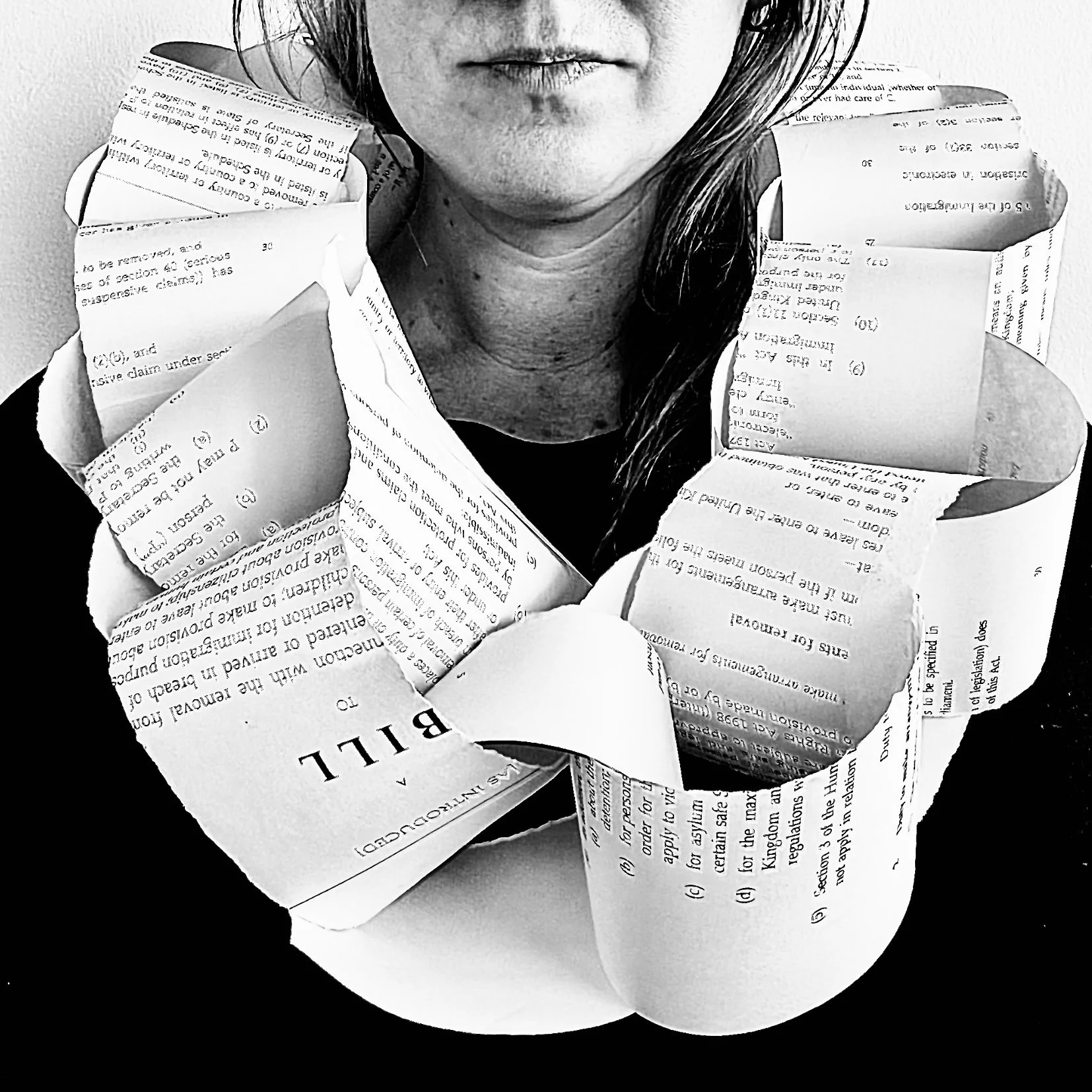
Unadornable
Unadornable, Photograph, 2023
‘I’m not a performance artist, but…’ was performed live at the RCA Gorvey Lecture Theatre, London, on 12 April 2023.
The performance included the live creation of a paper chain necklace made by ripping a paper copy of the Illegal Migration Bill.
A silent black-and-white film depicting material and human migration played on a large screen centre stage. The film included documents personal to the artist’s own family history alongside recent journalistic reporting highlighting social idiosyncrasies. It ended simultaneously with the necklace’s completion, followed by a spoken word piece created from extracted text of the Illegal Migration Bill.
The work and performance were delivered in and with peaceful intent.
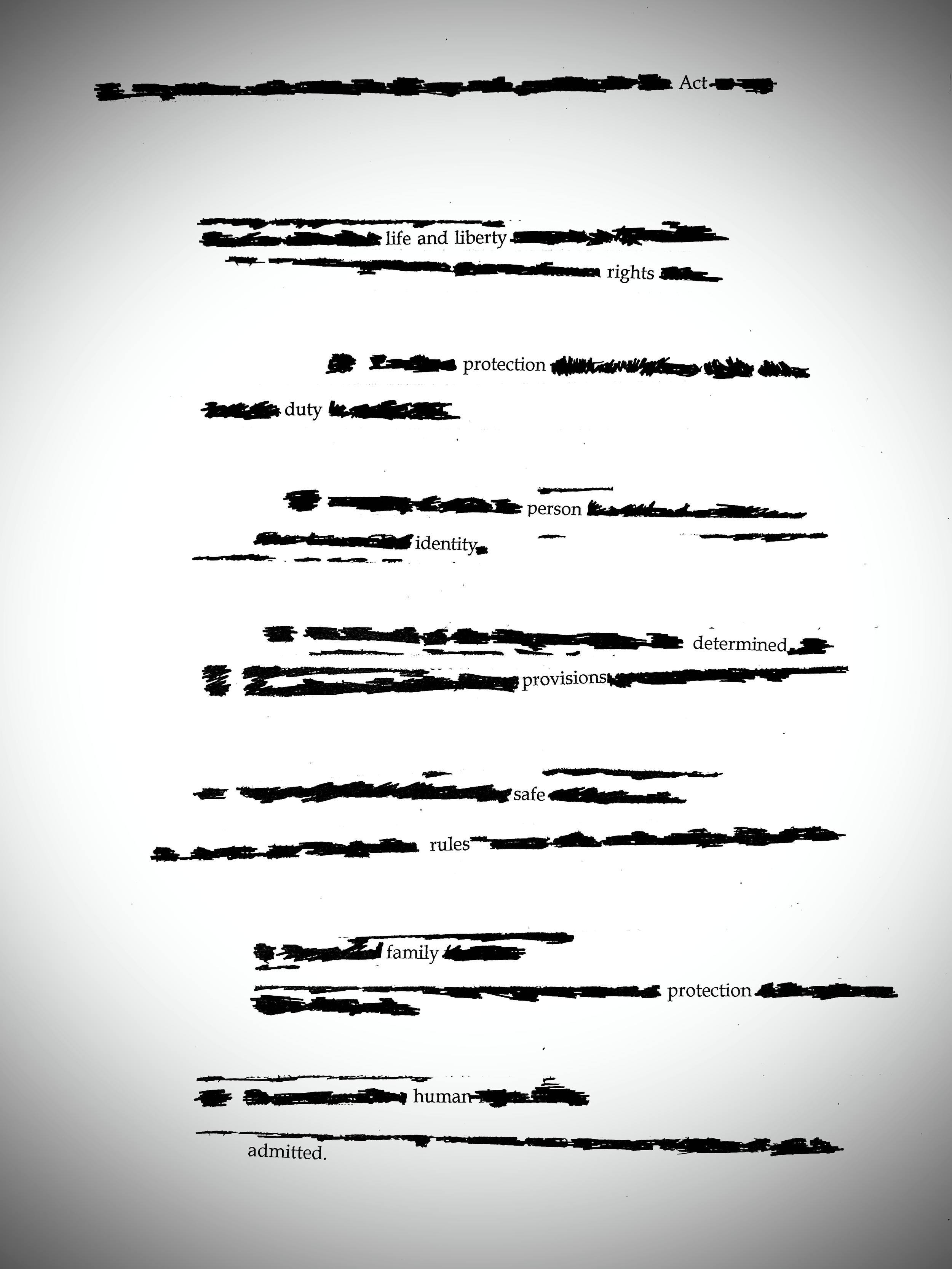
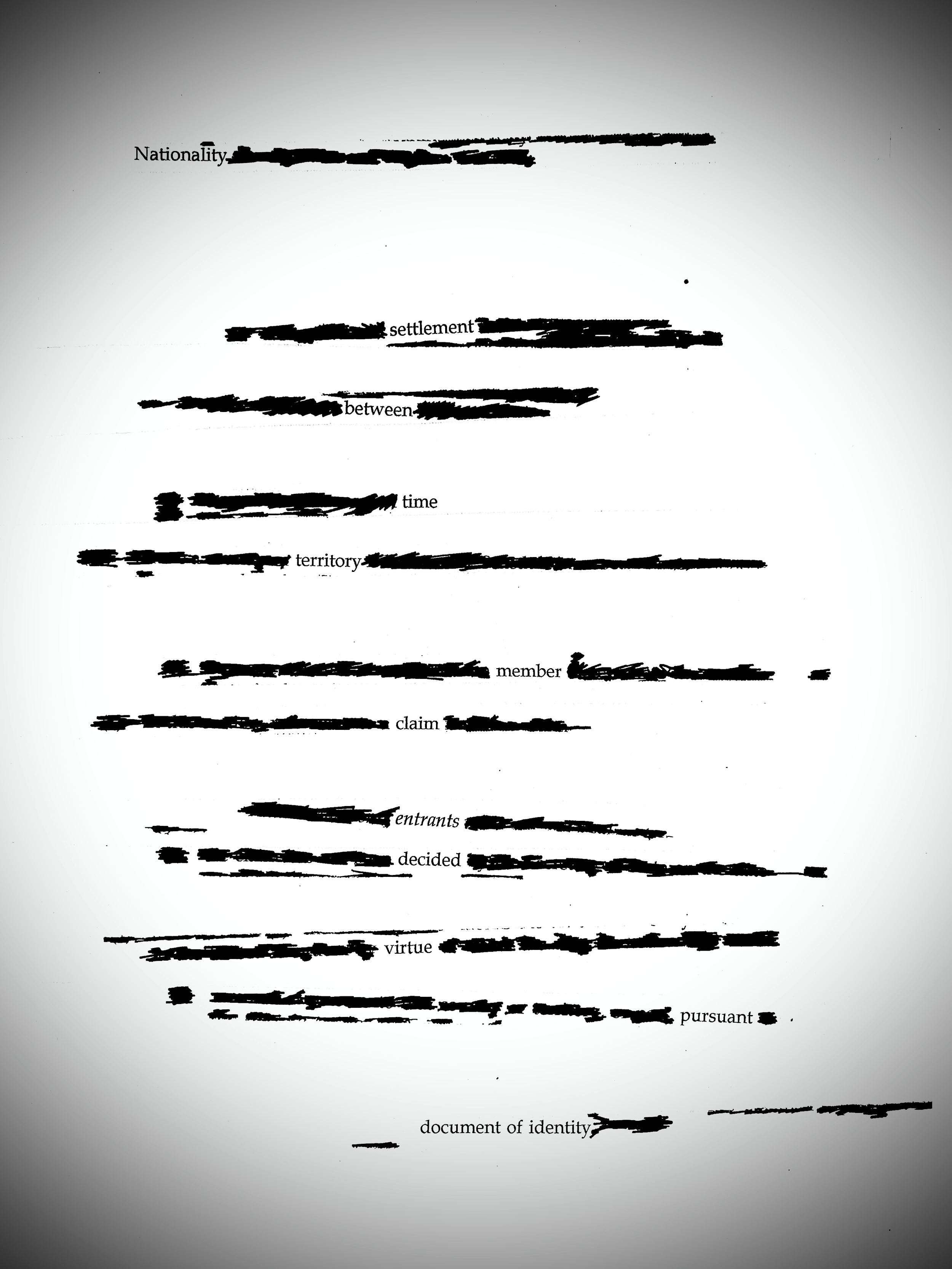
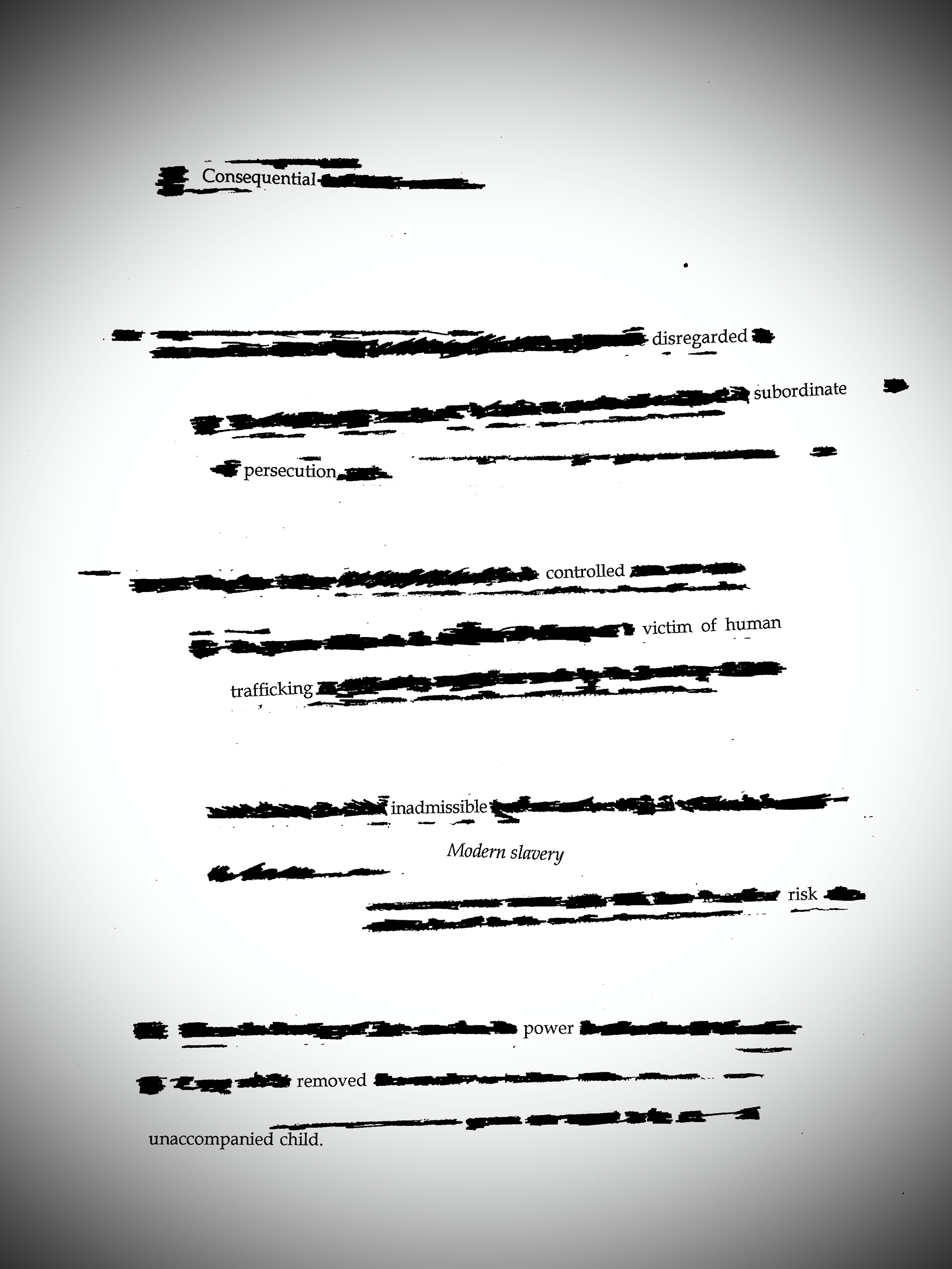
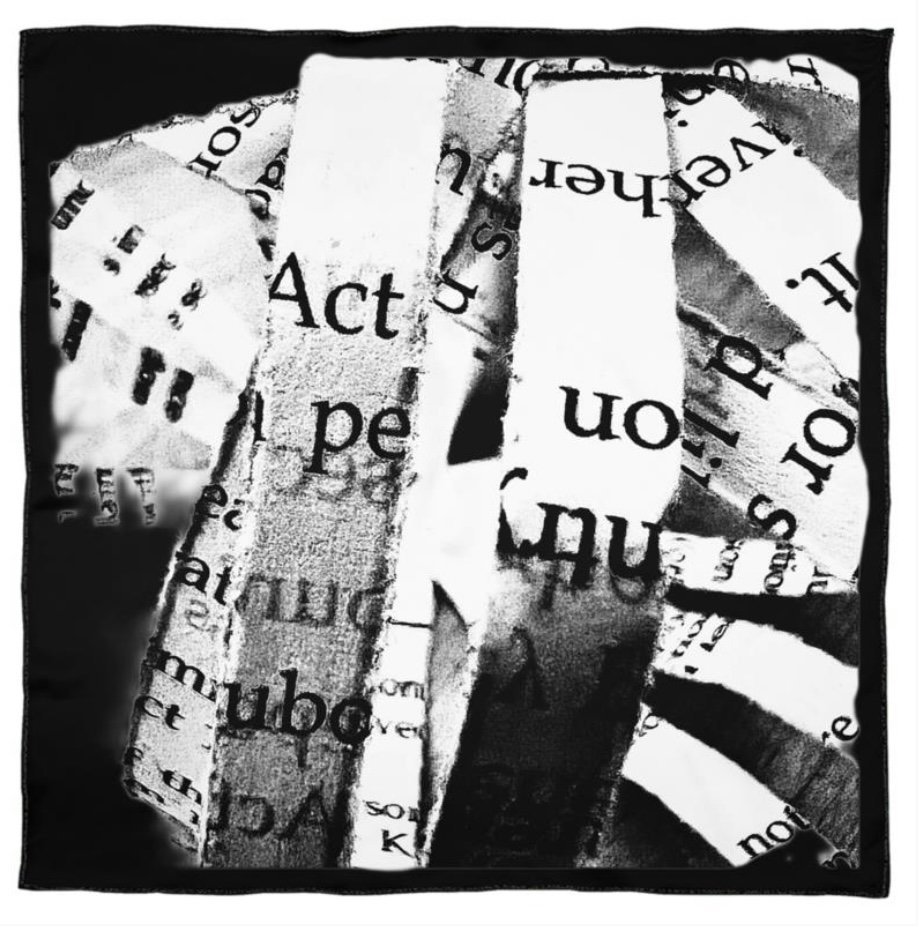
ACT , 2023, part of the wider body of work Unadornability, responds to the language and diktat of the contentious Illegal Migration Bill. Through subtle shifts in text and form, silk scarves and pocket squares were produced from photographed shredded strips of the bill as outwardly wearable statements of peace. Worn or displayed, these objects offer the owner a personal and reflective engagement with societal constructs while also allowing discretion; unlike placards or badges, the wearer can choose when the message becomes visible — a consideration within the often volatile public discourse surrounding migration.
disPLACEMENT
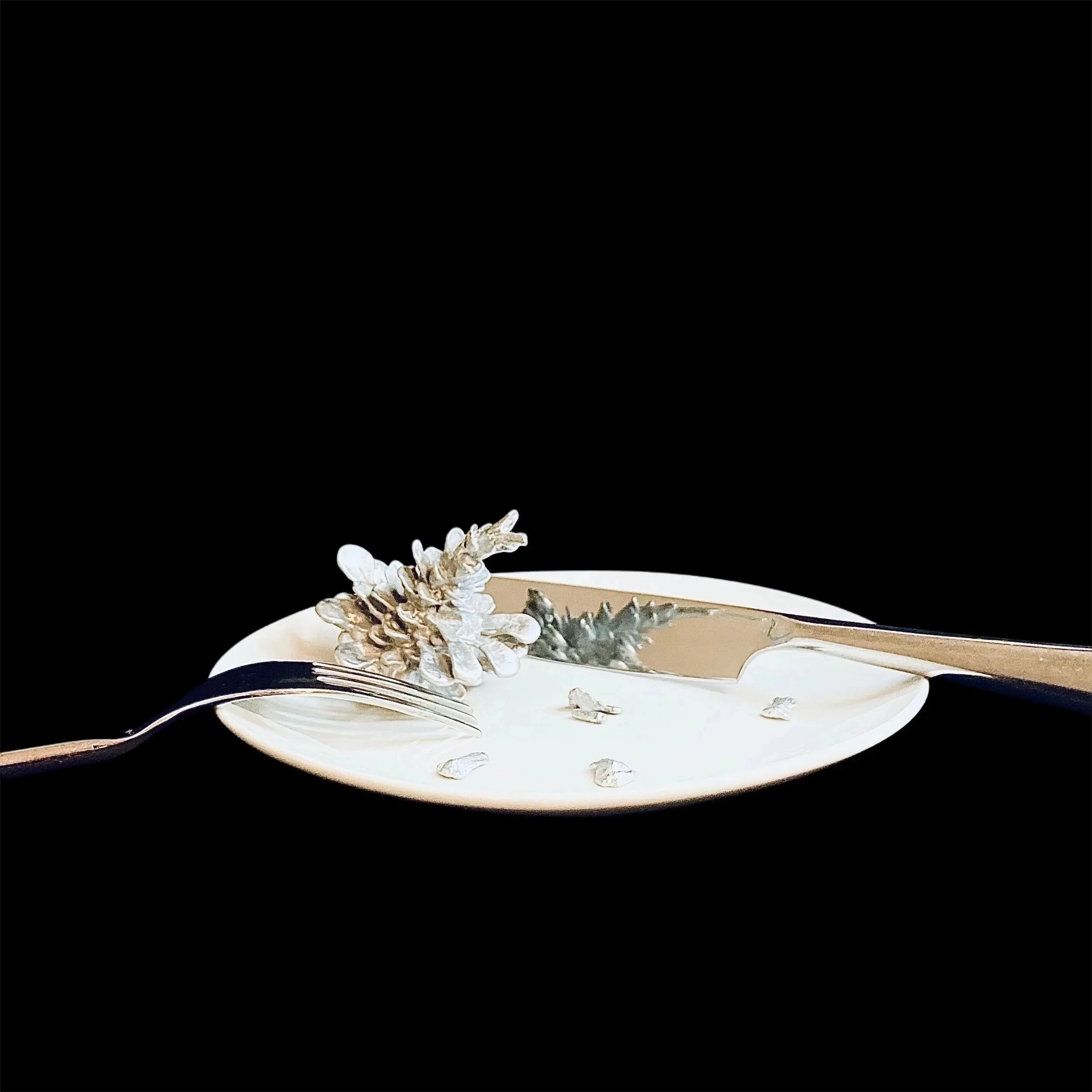
Crumbs, 2022
The Second World War is central to my maternal family history, part of what has been described as the ‘forgotten odyssey’. They were forcibly removed from Poland (now Ukraine) and deported to Siberia in cattle trains, a journey lasting over a month through dense pine forests before being transported by sledge to forced labour camps. Of the estimated 1.7 million people deported, only around 500,000 survived the brutal conditions and malnutrition, with 115,000 eventually escaping with General Anders’ army to Iran. The women and children in my family later became refugees in camps in Uganda, remaining there for six years before being transported to Liverpool on RMS Scythia, a converted Cunard troop ship.
Siberia is one of the coldest inhabited regions on earth. Female pinecones protect the seeds of pine trees, holding them safe through harsh winters. This work was created while living in Norfolk, UK, where my paternal grandparents met during the war. I would walk daily through defensive pinewoods planted for shelter and protection.
In my work, pinecones have come to symbolise resilience in adversity: protective forms, female guardians navigating the harshest conditions.


“I was twelve-and-a-half-years old, and determined to survive, no matter what. There were many pine trees, so I tried to eat pine buds and sucked on the branches; this seemed to satisfy my hunger. Hunger is the most terrible thing.”
(Anita Pashchwa -Kozicka (Wojciechowska, 2009, p.157)
“I remember we would go to pick up pinecones for heating in the nearby pine forest, which ended just where the potato field belonging to the kolkhoz began. We would gather some pinecones into our sack, then mother would stray into the potato patch and, while I sat on a tree branch as a lookout, fill the middle of the sack with potatoes. We would then fill the upper third of the sack with pinecones”.
(Witold Lukaszewski, www.polishexilesofWW2.org)
Crumbs II, 2022
Sisters Home Nest, 2022
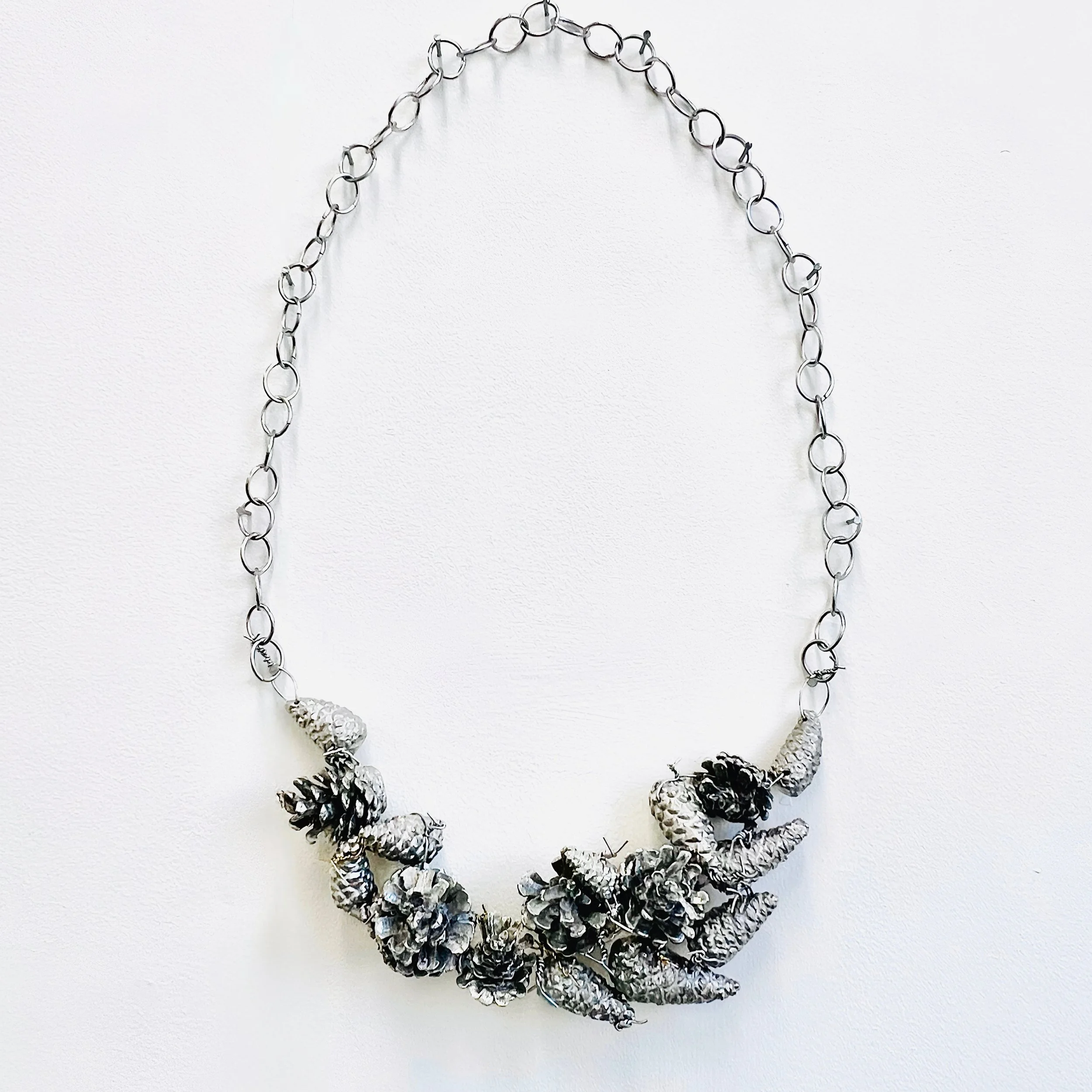
Statement Necklace I (2022) Cast aluminium pinecones link maternal and paternal histories of wartime and displacement, forming an oversized necklace that challenges perceptions of material weight and value through aluminium and entwined gold wire.